
Packaging The Consequences
Packaging
Packaging The Consequences Of Overly Processed Meats
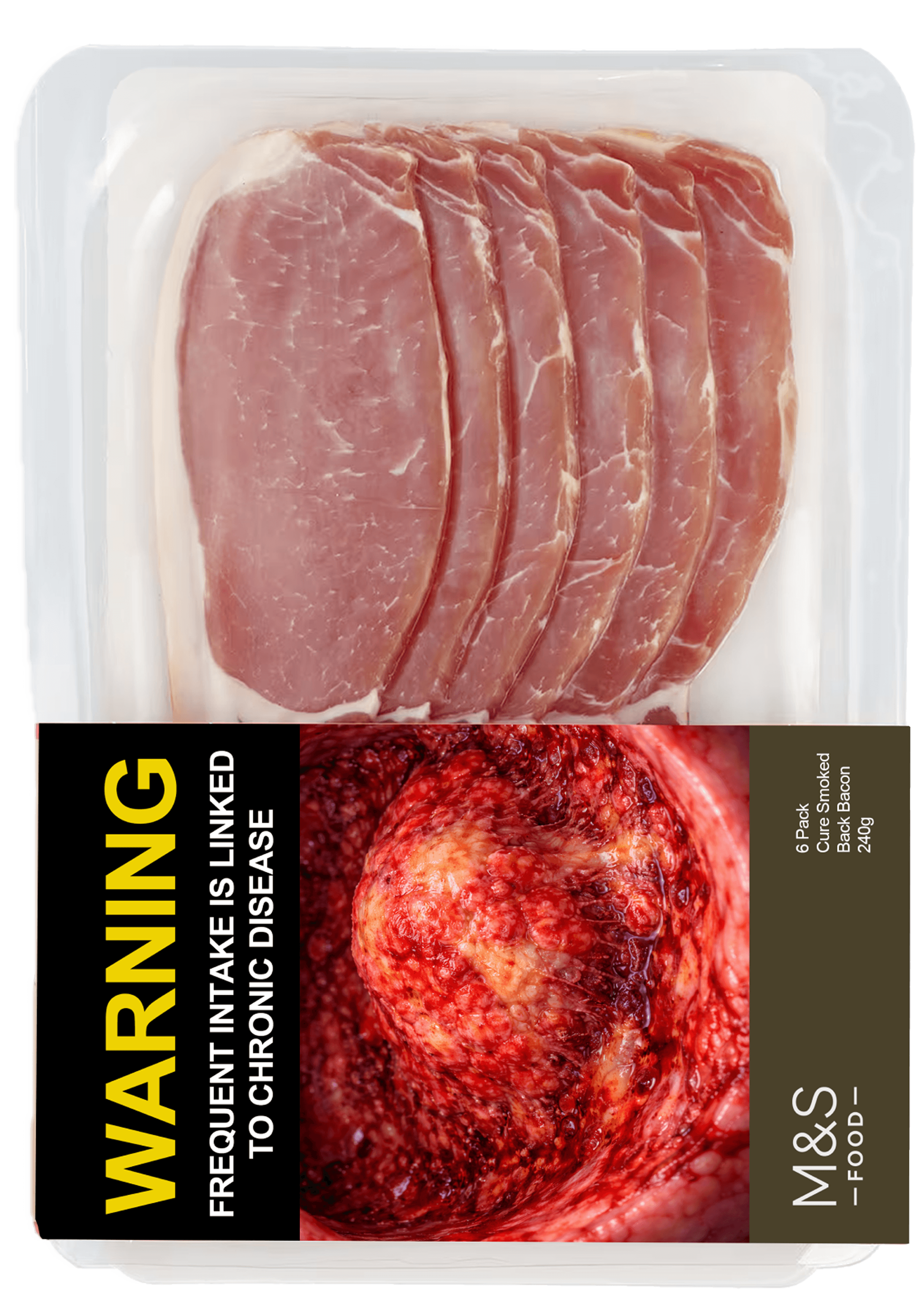
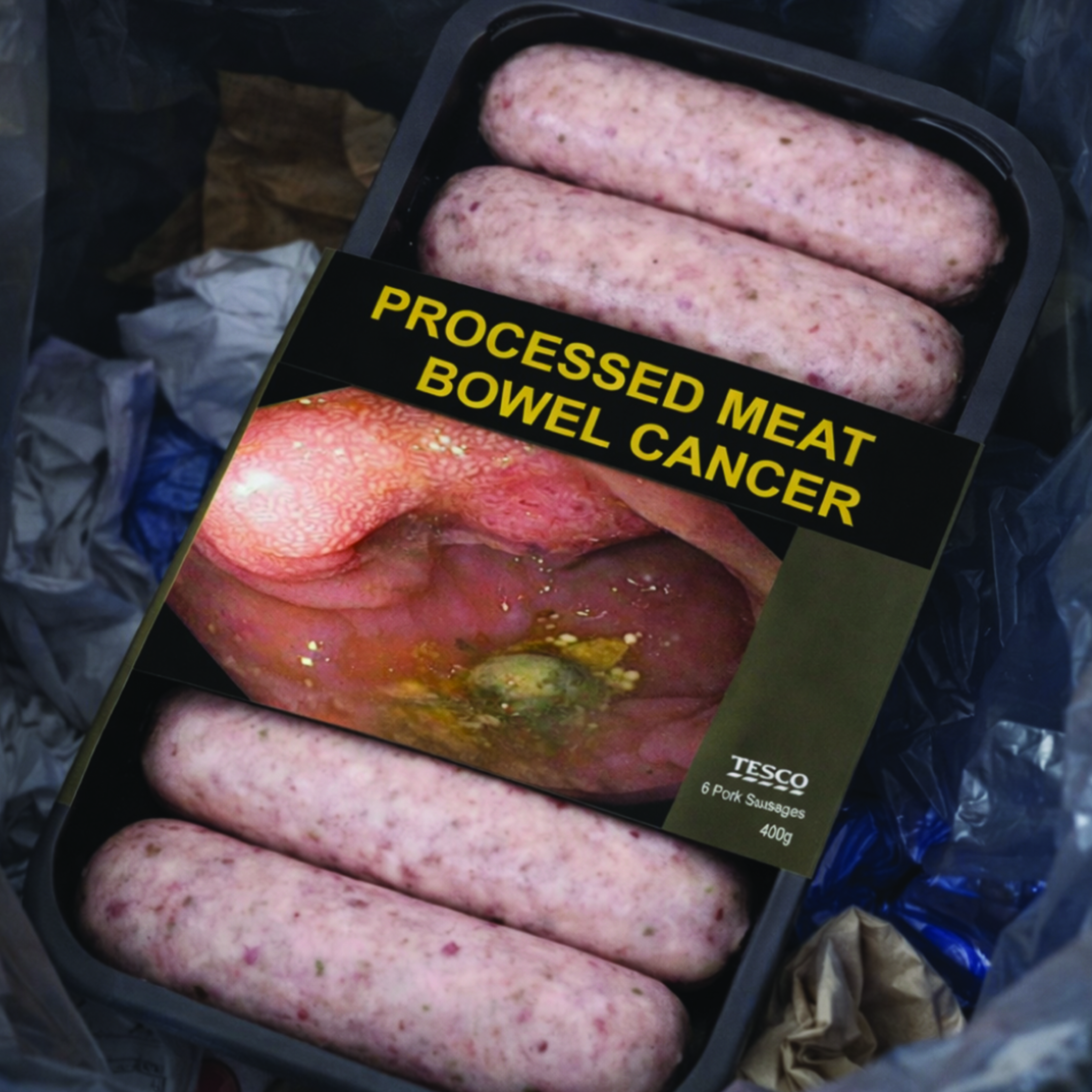
This project challenges conventional packaging design by rejecting familiar category codes, mascots, and predictable branding. The aim was to create a bold, inventive piece of packaging that stands out on the shelf, feels fresh, and pushes against safe, repetitive design trends. Inspired by tobacco warning labels, I created a three-level warning system for food products containing processed meat. The system uses percentage-based categories, escalating visual warnings and restricted branding to show how packaging could shift from persuasion toward public health communication.
Why I created this Packaging:
Research shows that processed meat is linked to bowel cancer
Supermarket packaging is designed to look appealing and friendly
Health risks are rarely communicated at the point of purchase
Space Allocation
The front of the pack is strictly divided to control visual hierarchy.
70 percent: Health warning imagery and statement
20 percent: Mandatory product information: Weight, ingredients, storage, legal text
10 percent: Brand identity
The warning must always dominate the surface area. The brand cannot visually compete.
This packaging concept reimagines supermarket processed meats as a warning-led product, using the visual language of cigarette packaging to highlight the health risks linked to processed meat. The aim was to create a design that feels uncomfortable, direct and impossible to ignore.